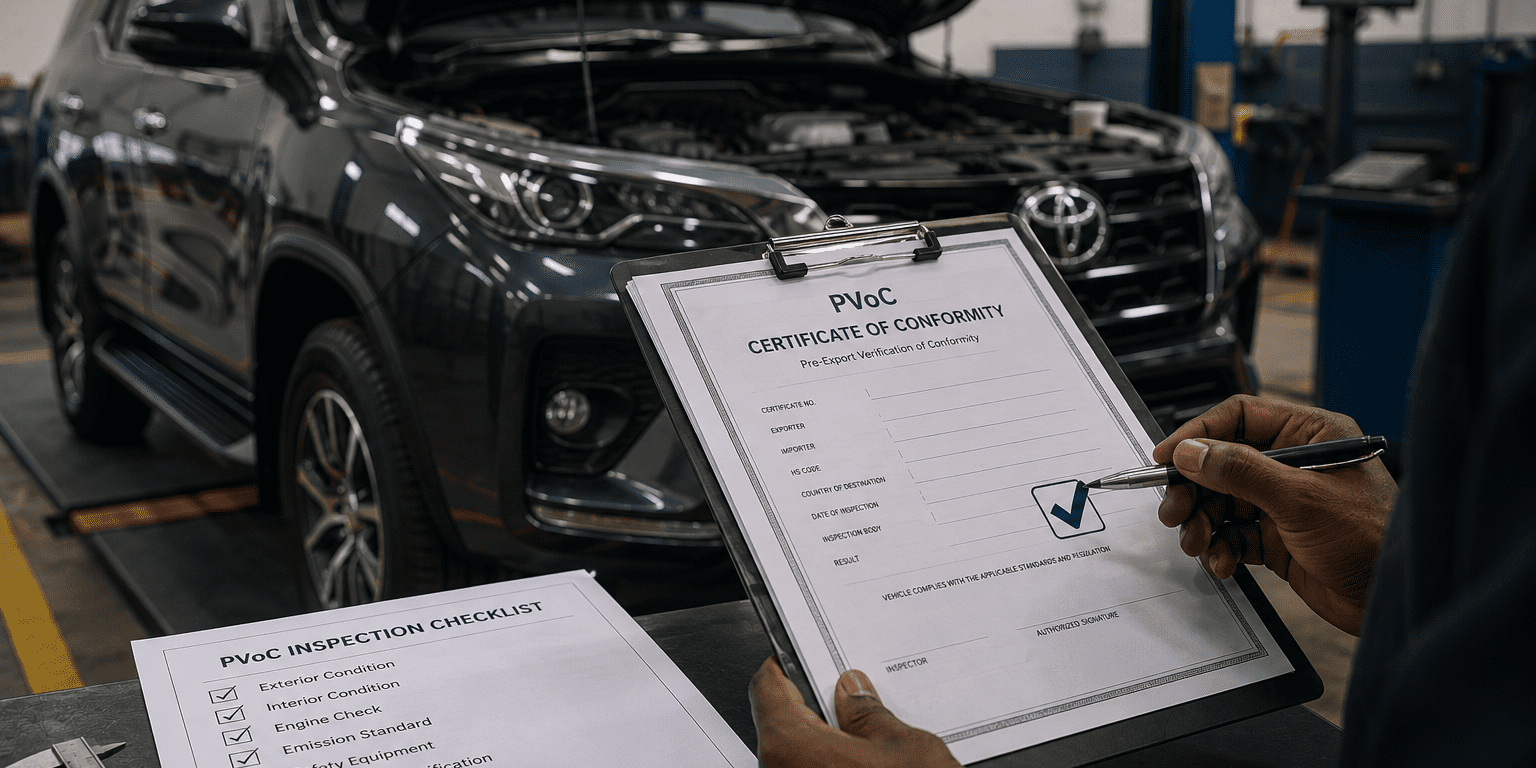
Shipping a car from the UK to Kenya, Tanzania, or Uganda? There’s one document that can make or break your entire export: the PVoC certificate. Without it, your vehicle won’t clear customs. It could be turned away at the port, hit with a serious financial penalty, or even destroyed at your cost.
And yet, it’s one of the most misunderstood parts of African vehicle shipping.
As a leading UK vehicle shipping company, Ascope Shipping has spent over 15 years helping UK exporters navigate the PVoC inspection process correctly, the first time, every time.
What Is a PVoC Certificate?
A PVoC certificate stands for Pre-Export Verification of Conformity. It’s an official document proving your vehicle meets the destination country’s safety, quality, and environmental standards, verified and issued here in the UK before your car even leaves the country.
The process works in the UK, at the export stage. An authorised inspection body physically examines your vehicle, checks your paperwork, and if everything passes, issues a Certificate of Conformity (CoC). That CoC is your PVoC certificate, and it must travel with the shipment as a mandatory customs clearance document.
Think of it as the destination country’s way of checking what’s coming in before it arrives. It protects consumers from substandard imports, protects importers from costly destination failures, and protects you, the exporter, from serious legal and financial consequences.
Why Is a PVoC Certificate Required for Car Exports?
Several East African countries introduced mandatory pre-export inspection programmes after years of problems with imported vehicles, cars that didn’t meet emissions standards, units far older than declared, or vehicles that simply weren’t roadworthy.
The PVoC for vehicle shipping directly tackles that. It ensures vehicles meet minimum safety and environmental requirements before they leave UK shores. It also speeds up customs clearance at the destination port, because the compliance check has already been done.
Most importantly: The exporter is personally liable for all legal and financial consequences if a vehicle arrives without a valid PVoC certificate.
Which Countries Need a PVoC Certificate for Vehicle Shipping?
The three main destinations for UK car exports that require a PVoC certificate are Kenya, Tanzania, and Uganda. Each has its own regulatory authority and approved inspection bodies.
| Country | Authority | Approved UK Agents |
| Kenya | KEBS (Kenya Bureau of Standards) | SGS, TÜV Rheinland |
| Tanzania | TBS (Tanzania Bureau of Standards) | Intertek, SGS |
| Uganda | UNBS (Uganda National Bureau of Standards) | Intertek, HQTS, TÜV Rheinland |
Other African countries with similar programmes include Cameroon, Ethiopia, Morocco, and Egypt. Always confirm requirements before booking freight for any African destination.
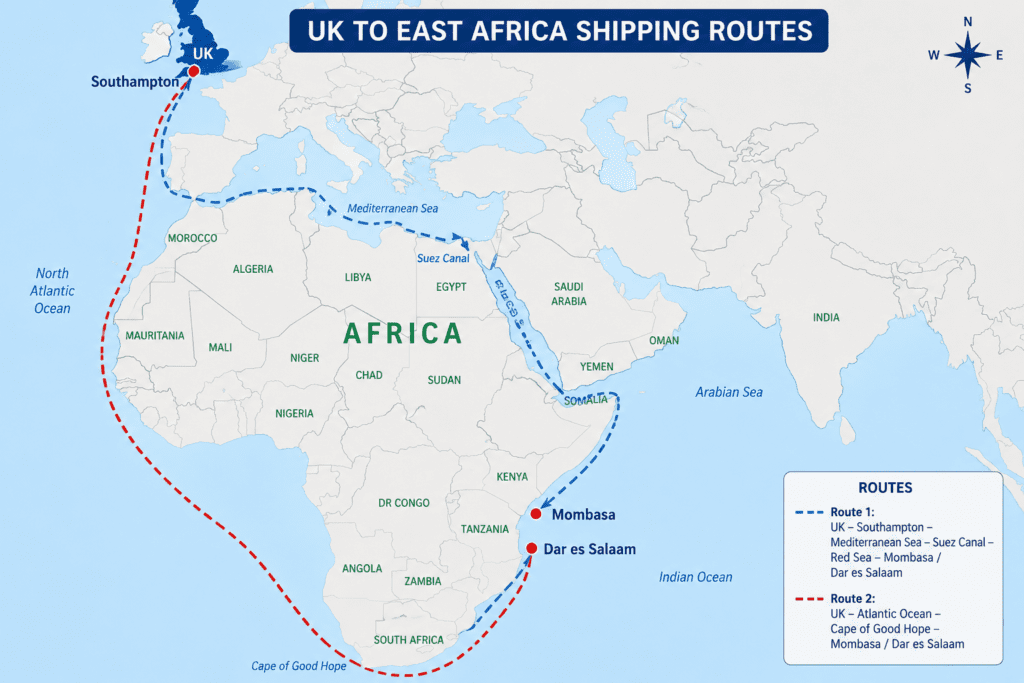
PVoC Certificate for Kenya Vehicle Shipping
Kenya runs one of the most established PVoC programmes on the continent, administered by KEBS and primarily operated by SGS across 18 global regions, including the UK.
Every vehicle exported to Kenya needs a Certificate of Conformity before departure. Ships arriving without one face a 5% CIF value penalty plus a mandatory destination inspection, which, if failed, means re-export or destruction at the exporter’s cost.
Key things to know for Kenya:
- The Kenyan buyer must provide an Import Declaration Form (IDF). Chase this early, as the PVoC process can’t start without it
- Kenya uses three certification routes (A, B, and C) depending on product type and risk level
- Physical inspection of vehicles is scheduled within four working days of a complete application
PVoC Certificate for Tanzania Vehicle Shipping
Tanzania’s programme is run by the Tanzania Bureau of Standards (TBS), with Intertek as the primary accredited agent. It is one of the strictest PVoC programmes in East Africa.
Every regulated shipment, including used motor vehicles, must carry a CoC before leaving the UK. Arriving at Dar es Salaam without a valid PVoC certificate is a costly mistake. TBS can impose a 15% CIF value penalty, block your vehicle from entering the country, or have the entire shipment destroyed.
Tanzania also conducts random portside sampling even after a CoC has been issued, so the vehicle must genuinely comply, not just appear to on paper. If you’re planning vehicle shipping to Tanzania, getting the PVoC process right from the start is the single best way to avoid delays at Dar es Salaam.
PVoC Certificate for Uganda Vehicle Shipping
Uganda’s programme is managed by the Uganda National Bureau of Standards (UNBS) and is particularly important to understand because Uganda is landlocked. Most vehicles arrive via Mombasa (Kenya) or Dar es Salaam (Tanzania) first, meaning you may need to comply with two PVoC requirements simultaneously.
Uganda introduced significantly stricter rules in 2024 that every UK exporter must know:
- Vehicles must be manufactured no more than 15 years before the import date (2010 or later as of 2025)
- All imported vehicles must meet Euro 4/IV emissions standards
- Vehicles must be right-hand drive (with limited exceptions)
- From February 2025, all imported vehicles must be insured through Ugandan insurance providers
Noncompliant shipments receive a Non-Conformity Report (NCR) and are refused entry. There is no leniency once a vehicle is at the port. Given the added complexity of a landlocked destination, car shipping to Uganda requires careful planning around both transit ports and PVoC compliance.
Documents Needed for PVoC Certification
Getting your documents right the first time is the single biggest factor in a smooth, on-time PVoC inspection. Here’s the core checklist for vehicle exports from the UK:
Required for all destinations:
- V5C Registration Certificate (vehicle logbook)
- Commercial invoice showing purchase price and vehicle details
- Packing list
- Export declaration (HMRC) and Movement Reference Number (MRN)
- Photographs — exterior, interior, VIN plate, odometer, engine bay
Kenya additionally requires:
- Import Declaration Form (IDF) — obtained by the Kenyan importer
- Completed PVoC application form for SGS or TÜV Rheinland
Uganda additionally requires:
- Completed application form for your chosen inspection body (Intertek, HQTS, or TÜV Rheinland)
- Some Uganda applications must be submitted via the Uganda Electronic Single Window (UESW) portal
Start gathering documents as soon as the sale and destination are confirmed. Delays in documentation, particularly the Kenya IDF, which depends on the buyer, are the most common reason PVoC inspections get pushed back and shipping schedules slip.
Step-by-Step PVoC Inspection Process for Vehicle Shipping
Step 1: Confirm Your Destination’s Requirements
Before anything else, verify:
- Does your specific vehicle meet the destination country’s age and emissions standards?
- Which inspection body is authorised for that country in the UK?
- What certification route applies?
If you’re unsure, speak to Ascope Shipping before committing to the shipment. A five-minute conversation now could save a five-figure problem later.
Step 2: Contact the Authorised Inspection Body
Only government-appointed bodies can issue a valid PVoC certificate. For UK-based vehicle exports:
- SGS or TÜV Rheinland → Kenya
- Intertek → Tanzania
- Intertek, HQTS, or TÜV Rheinland → Uganda
Register as an exporter on their platform and request certification.
Step 3: Submit Documents and Application
Submit your completed application form, V5C, invoice, packing list, photographs, and any country-specific documents. The inspection body reviews everything and creates an Initial Assessment Form before scheduling the physical inspection.
Step 4: Physical Inspection of the Vehicle
This is the core of the PVoC process. An authorised inspector visits your premises and checks:
- VIN verification against the V5C
- Odometer reading against declared mileage
- Overall vehicle condition
- Engine number and under-bonnet check
- Emissions compliance (critical for Uganda)
- Right-hand drive confirmation
- Full photographic record
Allow at least 1 metre of clear space around the vehicle. Ensure it starts and runs. Have all paperwork physically present. A clean, accessible vehicle with consistent documentation will pass smoothly.

Step 5: CoC Issued
Once the inspection is passed and all documents are verified, the Certificate of Conformity is issued typically within two working days. This is your PVoC certificate. It must travel with the bill of lading and shipping documents. Keep digital and physical copies.
Step 6: Vehicle Loaded and Shipped
With a PVoC certificate in hand, your vehicle is loaded via RoRo or container. Ascope Shipping operates regular sailings from Southampton, Tilbury, London Gateway, Felixstowe, Liverpool, and Sheerness to Mombasa, Dar es Salaam, and other East African ports every week.
Common PVoC Rejection Mistakes And How to Avoid Them
In 15 years of vehicle shipping, our team at Ascope Shipping has seen the same mistakes cause the same costly delays. Here’s what to watch:
Missing Kenya IDF: The Import Declaration Form must come from the Kenyan buyer. Without it, the PVoC application cannot begin. Chase it early.
Vehicle age non-compliance: Uganda’s 15-year rule is strictly enforced. Check the manufacturer’s date before you commit to the shipment.
Emissions standards failure: Uganda mandates Euro 4/IV as a minimum. Don’t assume — verify the vehicle’s spec sheet.
VIN mismatch: If the VIN on the vehicle doesn’t exactly match the V5C or invoice, the inspection fails immediately.
Wrong inspection body: A CoC from an unauthorised company is worthless at the destination port. Always confirm the agent is currently approved for your specific destination.
Leaving it too late: The full PVoC process takes 5–10 working days from a complete application. Start at least two to three weeks before your planned loading date.
Odometer discrepancy: Declared mileage and odometer reading must match across every document. Any inconsistency raises an immediate red flag.
How Long Does a PVoC Certificate Take?
From a complete, correct application:
- Document review: 1–3 working days
- Physical inspection scheduled: within 4 working days (1 working day for air freight)
- CoC issued after inspection: within 2 working days
Total typical timeline: 5 to 10 working days.
Build in at least 2–3 weeks before your loading date to give yourself a comfortable buffer for any document delays or re-inspection needs.
How Much Does a PVoC Certificate Cost?
PVoC inspection fees for used vehicle exports from the UK vary by inspection body, destination country, and scope of inspection. As a general guide:
- Kenya PVoC: around £150 to £350
- Tanzania PVoC: around £180 to £400
- Uganda PVoC: Request a current quote from your chosen inspection body
These fees are separate from your shipping costs, UK port fees, and destination customs duties. Always request an itemised quote upfront. At Ascope Shipping, we’ll advise you on current inspection costs as part of your overall export budget (no guesswork, no surprises).
What Happens If You Ship Without a PVoC Certificate?
Kenya: 5% CIF value penalty plus mandatory destination inspection. Failure at destination means re-export or destruction at the exporter’s cost.
Tanzania: 15% CIF value penalty. TBS can deny entry entirely. Non-compliant vehicles may be ordered for destruction at the exporter’s cost.
Uganda: Non-Conformity Report issued. Vehicle refused entry. Importer bears enormous costs for re-export or destruction.
These are not worst-case scenarios. They happen regularly. The cost of getting the PVoC certificate right the first time is a fraction of the cost of getting it wrong.
How Ascope Shipping Supports Your PVoC Process
With over 15 years of international vehicle shipping experience, Ascope Shipping handles African vehicle exports every single week. We know the PVoC process inside out: the paperwork, the timing, the inspection requirements, and the country-specific rules that trip up first-time exporters.
Here’s what we do for you:
- Upfront eligibility check: we confirm whether your vehicle meets the destination country’s age, emissions, and drive-side requirements before you commit.
- Document guidance: we tell you exactly what you need, in what format, and when to have it ready.
- Inspection coordination: We work with the authorised PVoC agents to schedule physical inspections around your loading date.
- Shipping from UK ports: Regular RoRo and container sailings from Southampton, Tilbury, Hull, Liverpool, and Sheerness to East African destinations.
- Full customs support: UK export declarations, HMRC paperwork, and Bill of Lading handled end to end.
- Transparent pricing: Clear, itemised quotes with no hidden fees.
Ready to Ship Your Vehicle to Africa? Start With Ascope Shipping
Getting the PVoC certificate right is not complicated when you know what you’re doing and even simpler when you work with a team that’s done it hundreds of times.
Ascope Shipping is a UK-based international vehicle shipping specialist with over 15 years of experience in car shipping from the UK to East Africa and beyond. We’re based in Hull, registered in England (Company No. 08560381), and trusted by exporters and dealers across the UK. From your first question about PVoC requirements through to your vehicle arriving safely at its destination port, we’re with you every step of the way.
Don’t risk your shipment. Get in touch today at +44 7717 769925 or email us at sales@ascopeshipping.co.uk. We’ll handle everything from PVoC inspection coordination to the moment your vehicle arrives at its destination port.