If you are trying to ship a truck, van, bus, pickup truck, or any other commercial vehicle from the UK, the first question that comes up is always the same: RoRo vs container shipping for commercial vehicles. Which method is right for your vehicle?
It is not a one-size-fits-all answer. Both methods work. Both are trusted worldwide. But the right choice depends on your vehicle type, condition, destination, and what you need to happen during transit. For a general comparison of the two methods across all vehicle types, see our main RoRo vs container shipping guide.
At Ascope Shipping, we have been handling commercial vehicle shipping from the UK for over 15 years, shipping thousands of vehicles from Hull and Tilbury ports. We have seen every scenario.
RoRo Shipping for Commercial Vehicles
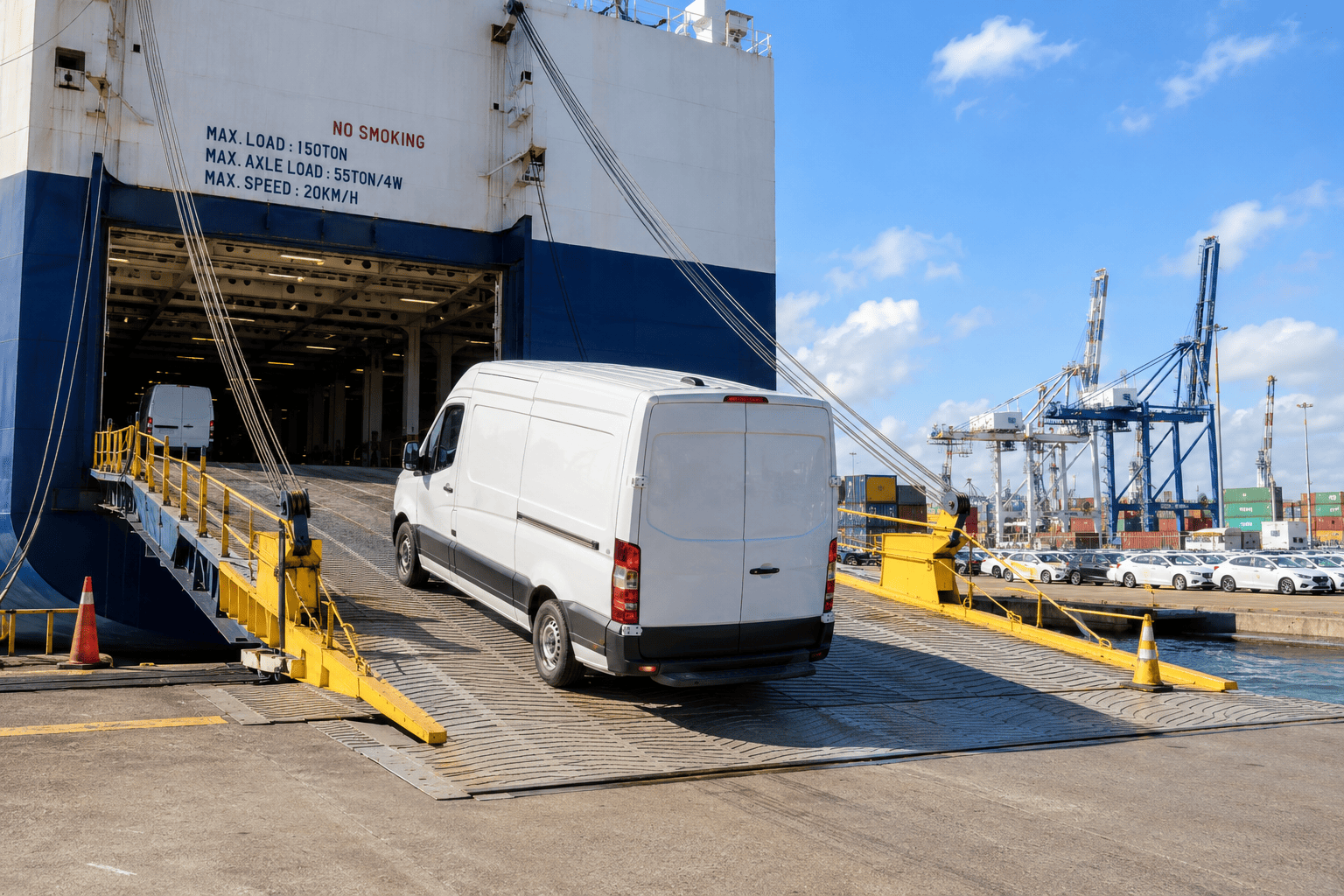
RoRo shipping is the most affordable method. Your commercial vehicle is driven directly onto a purpose-built vessel via a ramp, secured to the deck using straps and wheel chocks, and driven off again at the destination port.
These vessels are specifically designed for wheeled cargo. Think of them as enormous floating car parks, but built for trucks, vans, buses, and heavy equipment, not just passenger cars. The vessels used for large commercial units are often referred to as Pure Car Truck Carriers (PCTC), and they are built to handle vehicles of significant size and weight.
RoRo shipping is priced per lane metre, a calculation based on the length of your vehicle multiplied by the lane width it occupies on the vessel. A standard long-wheelbase van typically uses around 6 to 8 lane metres. A full-size truck or bus will use considerably more. This is important to understand because it directly affects your shipping cost.
RoRo works best when:
- Your commercial vehicle is fully operational and can be driven on and off the vessel
- You are shipping vans, pickup trucks, LCVs, buses, minibuses, or trucks to a destination with a dedicated RoRo terminal
- You want the most cost-effective option
- You are moving a fleet of running vehicles and want a faster, simpler loading process
Container Shipping for Commercial Vehicles
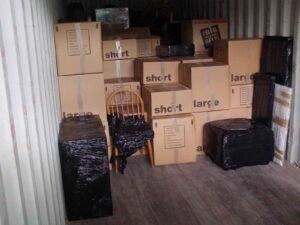
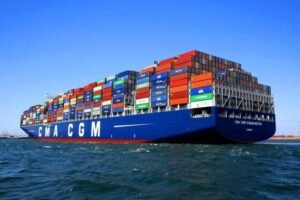
Container shipping means your vehicle is loaded into a sealed steel shipping container, either a 20ft or 40ft box, which is then craned onto a cargo vessel. Once those container doors close, your vehicle is not touched again until it reaches the destination port.
For commercial vehicles, two container options are most commonly used:
- Shared container (LCL): your vehicle shares a 40ft container with other vehicles heading to the same destination, more cost-effective for smaller vehicles like vans and pickup trucks
- Sole use container (FCL): your vehicle has the entire container to itself, essential for larger vehicles, non-runners, or when you need to load tools, spare parts, or additional cargo alongside the vehicle
For oversized commercial vehicles like double-deck buses, large construction equipment, or anything that will not fit inside a standard box, a flat rack container is used. This is an open platform with no sides or roof, allowing cargo to extend beyond standard container dimensions.
Container shipping works best when:
- Your commercial vehicle is non-running and needs crane or winch for loading
- You want to ship tools, spare parts, or additional cargo inside the vehicle
- Your destination does not have a RoRo terminal
- You are moving a high-value vehicle that needs maximum protection
- Your vehicle exceeds RoRo height limits, typically around 4.5 metres clearance
RoRo vs Container Commercial Vehicles: The Real Differences
This is where most guides go wrong. They compare these two methods using passenger car examples. Commercial vehicles have completely different considerations. Here is what actually matters.
Cost
RoRo shipping is generally cheaper for operational commercial vehicles because there are no container costs and loading is faster. You simply pay per lane metre.
Container shipping costs more upfront but can work out better when you factor in the ability to ship cargo inside the vehicle or when sole-use security is needed for high-value units.
For fleet vehicle shipping, RoRo usually wins on cost at volume. Fewer handling steps and faster port turnaround keep costs down.
Vehicle Condition
This is probably the single most important factor in the decision.
RoRo requires a running vehicle, full stop. If your truck, van, or bus cannot be driven onto the vessel under its own power, RoRo is not an option. Non-running commercial vehicles can only be handled by container, where the vehicle is craned or winched in.
Height and Size Limits
The RoRo height limit for commercial vehicles is typically around 4.2 to 4.5 metres, depending on the vessel and route. High-roof vans, double-deck buses, and taller commercial vehicles that exceed this clearance cannot use RoRo and must ship by container or flat rack.
A 20ft container works for a standard LWB van, while a 40ft is needed for longer vehicles or multiple units. Always confirm dimensions with your shipping agent before booking.

Protection Level
On RoRo, your commercial vehicle sits on an open or semi-enclosed deck. It is secured but exposed to salt air, humidity, and sea conditions for the entire voyage. Port handlers will drive or move it at both ends.
In a container, the vehicle is sealed from the moment it is loaded to the moment it arrives. Zero exposure, zero additional handling. For high-value commercial vehicles, this matters.
Personal Items, Tools, and Cargo
Can you put tools or personal items in a commercial vehicle during RoRo shipping? No. Vehicles must be completely empty on RoRo. On container shipping, you can load tools, equipment, and spare parts inside the vehicle, subject to customs declaration at the destination.
This is a major practical advantage for construction businesses, plant hire companies, and fleet operators who want to move equipment alongside the vehicle.
Destination Availability
Not every port in the world handles RoRo vessels. For popular routes, including commercial vehicle shipping to Africa and the Middle East, both methods are usually available from UK ports. But for less common destinations, container shipping often provides wider port coverage.
The main UK RoRo ports for commercial vehicles are Southampton, Tilbury, Liverpool, and Immingham. Ascope Shipping operates from Hull and Tilbury, covering both RoRo and container departures to key global routes.
Which Commercial Vehicle Types Use Which Method?
Vans and LCVs
RoRo works well for standard and long-wheelbase vans that are in running condition and within height limits. High-roof panel vans may exceed RoRo clearance, so always check before booking. Container shipping suits non-runners, high-roof models or when cargo needs to travel inside.
Trucks and HGVs
RoRo handles tractor units, rigids, and most HGVs that are operational. Very large or overheight trucks will need a flat rack container. Container shipping is the safer option for non-running or high-value HGVs. See our truck shipping page for the full range of options for larger commercial vehicles.
Buses and Minibuses
RoRo works fine for operational buses and minibuses within height limits. Double-deck buses almost always exceed RoRo clearance and require flat rack container shipping. For standard single-deck buses heading to West or East Africa, RoRo is typically more cost-effective and faster.
Pickup Trucks
RoRo shipping is simple and cost-effective for pickup trucks. They sit well within RoRo dimensions and are widely shipped this way to Africa and the Middle East, where RoRo is the dominant method on most routes.
Agricultural and Construction Vehicles
Can you ship a tractor or agricultural vehicle by RoRo from the UK? It depends on whether the vehicle is self-propelled and within vessel height limits. Many tractors and agricultural vehicles can use RoRo. Construction equipment with tracks or non-standard dimensions usually needs container or flat rack shipping.
Fleet Vehicle Shipping: RoRo or Container?
RoRo vs container for fleet vehicles comes down to volume and vehicle condition.
For large fleets of running vehicles, say 10 or more operational vans or pickup trucks, RoRo is almost always the more practical and cost-effective choice. Vehicles drive on and off without loading labour, turnaround is faster, and per-unit costs are lower.
For smaller fleets, mixed-condition units, or where cargo consolidation matters, container shipping gives you more flexibility. A 40ft sole-use container can typically hold two standard vans with cargo loaded inside each, useful for businesses relocating equipment.
For running vehicles in volume, RoRo from a major UK port will almost always be the lowest-cost method. A UK commercial vehicle shipping agent like Ascope Shipping can advise on the most cost-efficient loading configuration.
Documents Needed to Ship a Commercial Vehicle from the UK
The core documents required are:
- V5C logbook (proof of ownership)
- Commercial invoice (for customs at the destination)
- Bill of lading (issued by the shipping line, your contract of carriage)
- Export declaration (submitted to HMRC via the Customs Declaration Service)
- Marine insurance certificate (strongly recommended)
For certain destinations, additional certificates of conformity, de-registration documents, or fumigation certificates may be required. You can review the UK government’s guidance on exporting goods for the latest official requirements. Ascope Shipping handles the full customs clearance and export documentation on your behalf.
Do You Need Marine Insurance for Commercial Vehicle Shipping?
Yes, and this is not optional advice. Marine insurance protects your asset against loss, damage, and total loss during transit. RoRo insurance typically covers total loss only. Container shipping policies can offer more comprehensive cover, including transit damage.
For high-value commercial vehicles, especially fleet assets, specialist vehicles, or vehicles with fitted equipment, comprehensive marine insurance is essential. See our marine cargo insurance page for full coverage details.
RoRo vs Container Shipping for Commercial Vehicles: Decision Guide
| Situation | Best Method |
|---|---|
| Running van, truck, or bus | RoRo |
| Non-running commercial vehicle | Container |
| Need to ship tools or cargo inside | Container |
| Over-height vehicle | Flat rack container |
| Large fleet of running vehicles | RoRo |
| High-value or specialist vehicle | Container |
| Budget-conscious, standard route | RoRo |
| Destination without RoRo terminal | Container |
| Pickup truck to Africa or Middle East | RoRo |
Why Choose Ascope Shipping for Commercial Vehicle Export?
Ascope Shipping has been handling commercial vehicle shipping from the UK for over 15 years. We have shipped thousands of vehicles, from individual vans and pickup trucks to full fleets of buses and HGVs, to destinations across Africa, the Middle East, and beyond.
We operate from Hull and Tilbury, giving you direct access to both RoRo and container commercial vehicle shipping from two of the UK’s most active commercial ports.
Whether you need a RoRo shipping quote or want to discuss the best container option for your fleet, our team gives you straight, experienced advice, not a sales pitch.
Get in Touch
Ready to ship your commercial vehicle? Whether it is a single van, a specialist HGV, or a full fleet heading overseas, our team will talk you through the right method for your vehicle and destination, with no sales pressure and no guesswork. Call us on 01482 228366, WhatsApp +447717769925, or email sales@ascopeshipping.co.uk to get your tailored quote today, and let Ascope Shipping handle everything from collection at the UK port through to safe arrival at your destination.