

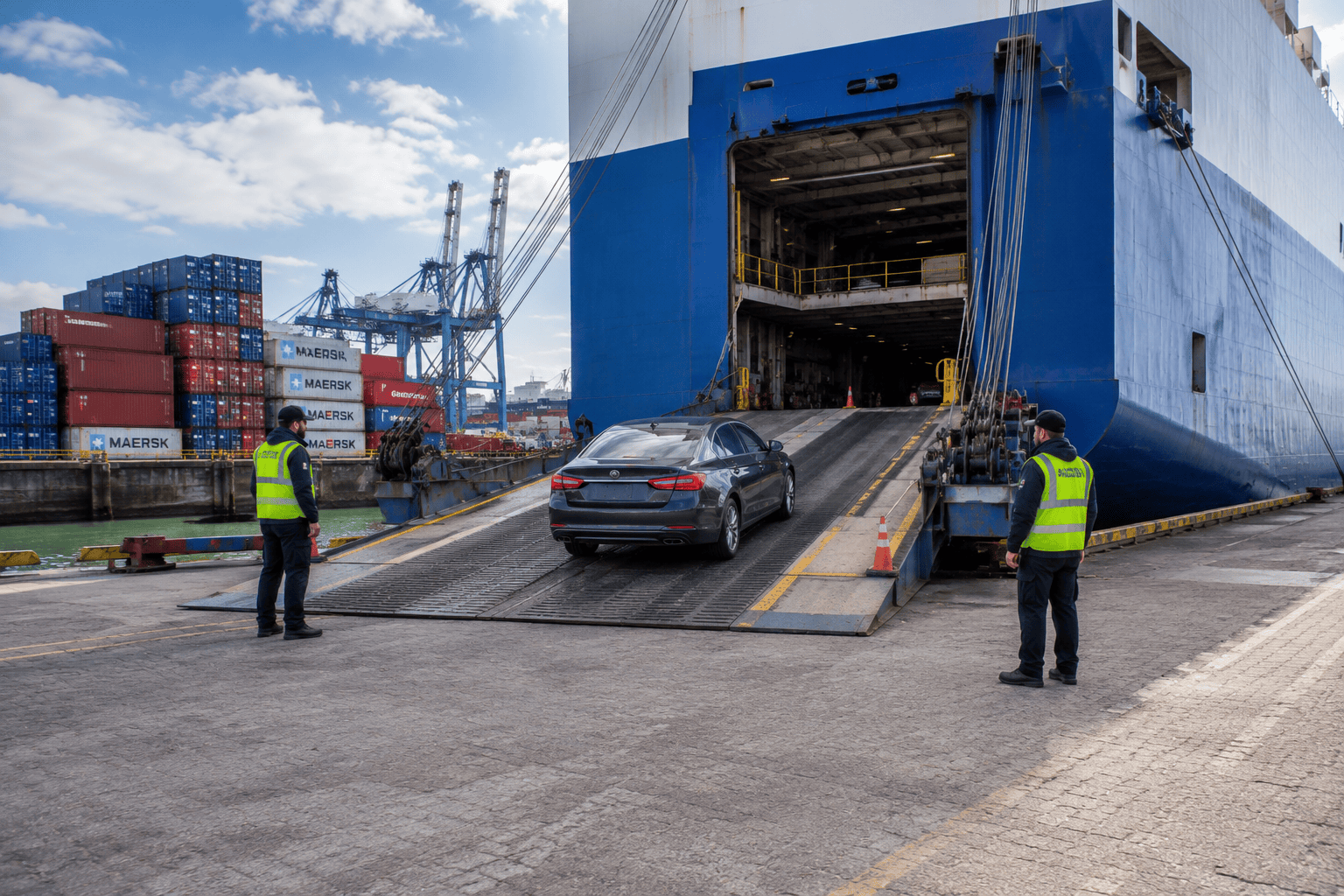
If you’re figuring out how to import a car to Ghana from the UK, one detail decides whether your shipment clears Tema Port smoothly or sits there racking up storage fees: knowing the rules before you book, not after your car arrives. Vehicle age, steering configuration, and duty calculation catch out even experienced buyers. This guide walks through exactly what Ghana requires, sourced from official Ghana Revenue Authority (GRA) guidance, so you know what you’re dealing with before you ship.
If you’re ready to compare shipping methods and get a price, visit our car shipping to Ghana page. This guide focuses on eligibility, compliance, and duty, the questions to answer before you ship.
Two rules decide this before anything else gets considered.
Ghana permits used vehicle imports up to 10 years old, calculated from the year of manufacture, not the registration date. For a car arriving in 2026, that means model year 2016 or newer. This standard is set by the Ghana Standards Authority and applies regardless of vehicle condition.
Vehicles with major structural damage, or without a working odometer reading in kilometres per hour, are not eligible for import, separate from the age rule.
Confirm your vehicle’s exact manufacture year (not first registration) against the V5C before booking. This is the single most common reason a shipment gets rejected at the UK end.
This is the part most UK shipping guides skip, and it matters more for UK exporters than for exporters from almost anywhere else, because nearly every UK car is right-hand drive.
Under Ghanaian customs law, right-hand drive (right-hand steering) vehicles are not permitted into the country as standard. There is a policy dispensation that allows some right-hand drive vehicles in on application, but this is discretionary and the approval sits solely with the Minister of Trade. It isn’t a routine paperwork step.
Even where dispensation is granted and the vehicle clears the port, customs requires the vehicle to be dismantled and refitted to left-hand steering before it’s permitted on Ghanaian roads. This is a physical conversion, not a formality. It adds real cost and time on top of shipping and duty.
What this means practically: before committing to shipping a right-hand drive UK car to Ghana, confirm directly with our team what the current dispensation and conversion process looks like for your specific vehicle. This is a step worth getting right before your car leaves the UK, not after it arrives in Tema.
Ghana’s duty on used vehicles is based on the CIF (Cost, Insurance, Freight) value, with the vehicle’s original purchase price first depreciated by up to 50% depending on its age, before duty and levies are applied. Import duty itself is charged as a percentage of that value, based on engine size:
| Engine Size (Petrol) | Import Duty |
|---|---|
| Up to 1,000cc | 5% |
| 1,000cc – 3,000cc | 10% |
| Over 3,000cc | 20% |
Diesel vehicles follow a similar structure with different thresholds (1,500cc and 2,500cc). On top of import duty, every vehicle also carries VAT (12.5%), NHIL (2.5%), GETFund Levy (2.5%), and several smaller levies: AU, ECOWAS, EXIM, an examination fee, and a Special Import Levy, that together add several more percentage points to the total.
These rates come directly from GRA’s published vehicle duty schedule, but duty calculations depend heavily on your vehicle’s specific value, age, and classification. For a detailed breakdown and worked examples, see our Ghana car import duties and taxes page, or check GRA’s own vehicle duty calculator via ICUMS before you commit to a purchase.

Our team checks every document before your vehicle is loaded, so nothing holds up clearance once it reaches Ghana. For the UK side of the paperwork, see our guide on documents required to ship a car.
RoRo is the cheaper, faster-turnaround option for standard drivable vehicles. If you’re shipping a luxury or classic car, or want to send personal belongings alongside the vehicle, our container shipping to Ghana service offers more protection. For current pricing on both methods.
First-time importers most often get caught out by the age calculation (manufacture year, not registration year), by assuming right-hand drive is automatically accepted, or by underestimating the full duty and levy stack beyond the headline import duty rate. For a full rundown of mistakes to avoid, see our dedicated guide: 7 Mistakes When Shipping a Car to Ghana.
Ghana permits used vehicles up to 10 years old, calculated from the year of manufacture. For a car arriving in 2026, that means model year 2016 or newer.
Right-hand drive vehicles aren’t permitted as standard under Ghanaian customs law. A dispensation exists but requires Minister of Trade approval, and the vehicle must be converted to left-hand steering after clearance before it can be driven in Ghana. Speak to our team before booking if your vehicle is right-hand drive.
Duty is based on the CIF value after an age-based depreciation of up to 50%, then charged at 5–20% depending on engine size, plus VAT and several smaller levies. See our Ghana duty guide for a full breakdown.
You’ll need the V5C logbook, Bill of Lading, purchase invoice, passport/ID copy, and an import declaration form filed with GRA.
RoRo is cheaper and suits standard drivable vehicles. Container shipping offers more protection and is better for luxury, classic, or high-value cars.
Before you book anything, confirm your vehicle meets Ghana’s age and steering requirements and that your documents are in order. Our team reviews eligibility case by case, so nothing gets stuck at Tema Port.
No signup. No obligation.
Your details are safe — we never share them.
Need to tell us more? Ask us a question or get a free quote here. Or simply give us a call: